


Sources checked: 25 November 2026. General legal information; the applicable law and remedy depend on the facts and procedural stage.
A commercial relationship does not rule out criminal liability. Equally, an unpaid invoice, failed project or broken promise does not establish an offence merely because substantial money is involved. The question is whether the alleged facts satisfy a particular offence. For businesses in Ahmedabad and across Gujarat, choosing the correct remedy begins with the transaction record, not the label “fraud”.
When can a commercial dispute involve an offence?
Start with what was represented, by whom, when it was made and what action it induced. BNS section 318 addresses cheating; a later failure to perform does not, by itself, establish dishonest intention when a promise was made. Section 316 requires entrustment or dominion over property and the specified dishonest conduct. The two provisions should not be added mechanically to every payment dispute.
Hypothetical example: a supplier accepts an order intending to fulfil it but subsequently loses production capacity. That failure alone does not establish cheating. An allegation that a supplier knowingly used fabricated capacity records to obtain an advance requires a different inquiry. Neither conclusion follows simply from the amount remaining unpaid.
In G. Saminathan v State, 2026 INSC 772, the Supreme Court quashed an IPC prosecution arising from a development agreement because the allegations and record did not establish the offences. Its conclusion was tied to those facts; it does not immunise development agreements or other commercial transactions from criminal scrutiny.
Civil recovery and criminal proceedings serve different purposes
Civil proceedings or arbitration may address repayment, damages, performance and contractual rights. Criminal proceedings examine alleged offences and responsibility under criminal law. A complaint should identify the alleged conduct and supporting material; it should not use the possibility of arrest as a bargaining tool to collect a debt.
Conversely, the availability of a civil remedy does not erase an otherwise disclosed offence. In C.S. Prasad v C. Satyakumar, 2026 INSC 39, the Supreme Court rejected the proposition that a civil element necessarily excludes criminal liability. A civil decision must be read for what it actually decides; it is not invariably conclusive on allegations such as criminal intent or forgery.
Does an arbitration clause prevent an FIR?
No. An arbitration clause does not confer immunity from criminal proceedings where the allegations disclose an offence. S.W. Palanitkar v State of Bihar explains that arbitration cannot substitute for criminal prosecution of an alleged offence. Equally, the existence of an arbitration clause cannot supply missing criminal ingredients. The contract, complaint and procedural history must be examined separately.
Businesses should preserve their contractual remedies and assess applicable deadlines while responding to criminal proceedings. The appointment of an arbitrator, an award or a challenge to that award does not automatically dispose of a criminal case. Related information appears on the arbitration page.
Directors and employees: identify the individual role
A complaint should distinguish the company’s transaction from each individual’s alleged participation. Identify who made the representation, authorised the payment, controlled the relevant property or knowingly participated in the alleged act. Office alone does not establish personal criminal responsibility. Anil Khandelwal v Phoenix India, 2025 INSC 1069 reiterates the need for a legal basis and specific allegations when seeking to implicate company officers. Special statutes may impose separately defined responsibility; their wording must be checked.
Quashing and settlement require separate analysis
The High Court’s inherent jurisdiction is preserved by BNSS section 528; section 482 CrPC remains relevant where the older procedure applies. Quashing may be available where allegations, taken as a whole at face value, do not disclose an offence, or proceedings amount to abuse of process. It is not ordinarily a trial of disputed evidence or witness credibility. Anukul Singh v State of Uttar Pradesh, 2025 INSC 1153 restates these limits. Filing a petition does not itself stay investigation or secure protection from arrest.
Settlement also requires a lawful procedural route. A private agreement or repayment does not automatically terminate prosecution. The court considers the offences, circumstances and wider impact. P. Dharamaraj v Shanmugam discusses why compromise may support relief in appropriate private disputes but cannot be treated as decisive where corruption or serious economic wrongdoing affects society or others. No party should promise withdrawal or quashing that depends on a court’s decision.
What to preserve before choosing a remedy
- The signed contract, amendments, purchase orders, arbitration clause and relevant notices.
- A dated chronology linking each representation, payment, delivery and alleged diversion to its supporting record.
- Bank records, invoices, ledger entries and acknowledgements, including material that qualifies the allegation.
- Original emails, messages, attachments and electronic records; preserve originals and metadata rather than editing extracts.
- The role and authority of each proposed accused, supported by documents rather than job titles alone.
- Complaints, FIRs, summons, court orders, arbitration papers and settlement communications already exchanged.
Maintain a consistent factual account across proceedings. Separate what a document proves from an inference or disputed assertion. For related routes and document preparation, see financial fraud remedies.
Ahmedabad, Gujarat and the applicable procedure
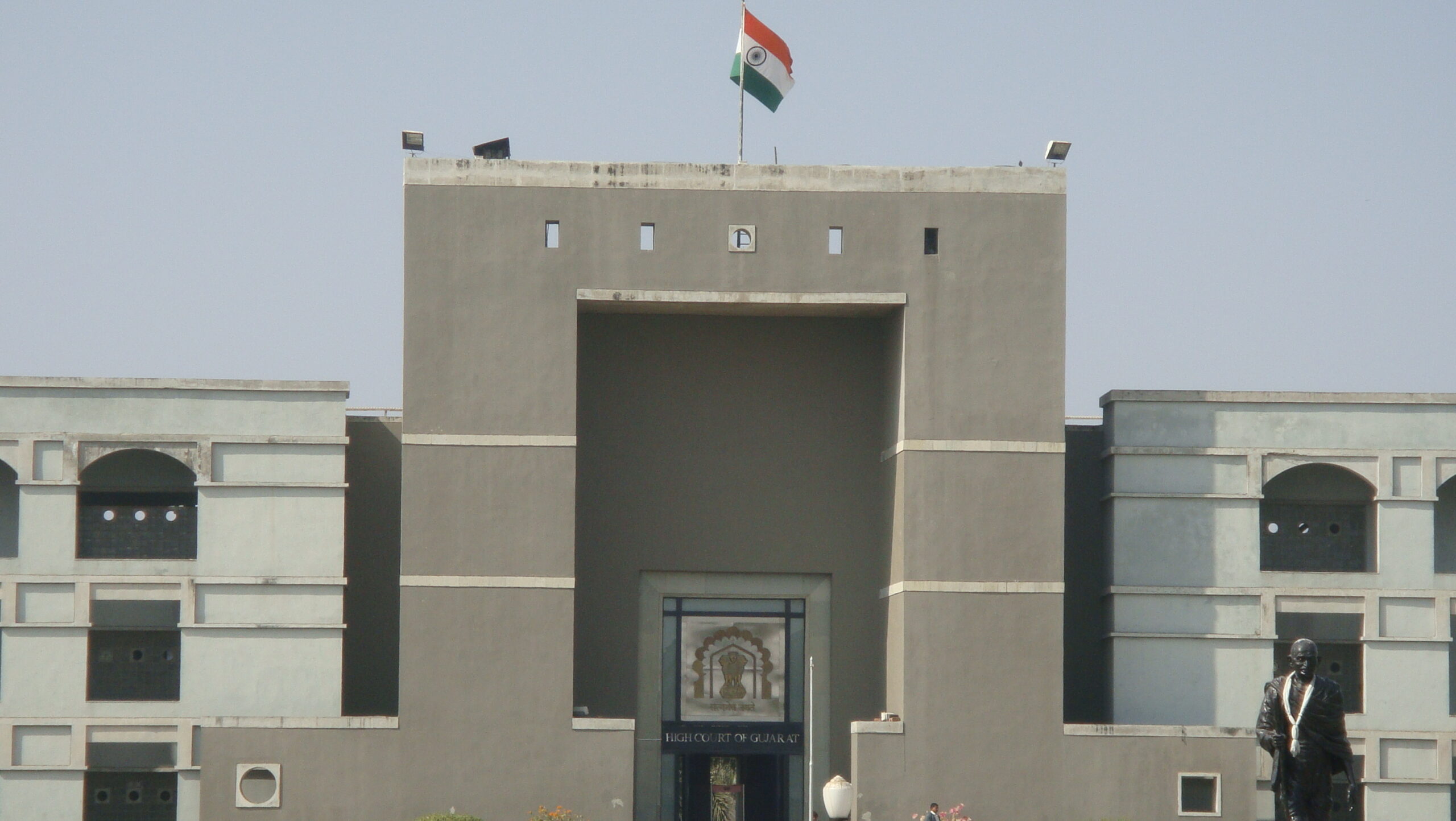
An Ahmedabad business address does not alone determine police or court jurisdiction. Relevant considerations include where representations were made or received, property was delivered, acts occurred and consequences followed. BNSS section 173 permits information about a cognizable offence irrespective of the area of occurrence; that reporting provision does not resolve every later jurisdiction question. Any application to the Gujarat High Court requires a proper jurisdictional basis.
BNS and BNSS principally commenced on 1 July 2024. The date of the alleged conduct and the savings provisions matter: BNS section 358 preserves specified matters under the IPC, while BNSS section 531 preserves specified proceedings already pending under the CrPC. Earlier IPC judgments should be applied with attention to the current statutory text.
Frequently asked questions
Is failure to repay sufficient for a cheating case?
No. Non-payment alone does not establish the required deception and dishonest inducement. The allegation and available record must address the relevant ingredients.
Can arbitration and criminal proceedings continue together?
They can, where their respective legal requirements are met. Neither the arbitration clause nor the filing of a complaint determines the other proceeding automatically.
Can every director be named in the complaint?
A title is insufficient. Assess the person’s alleged conduct and any specific statutory basis for liability before naming them.
Will a settlement guarantee quashing?
No. The lawful route, nature of the offence and wider public consequences remain relevant to the court’s decision.
Related articles: cheating and criminal breach of trust; responding to a financial-fraud FIR.
Read the White-Collar Crime & Economic Offences hub for the wider framework. Contact Candour Legal: WhatsApp +91 9328162446 or contact@candourlegal.com. Share only basic intake details initially; avoid sending confidential documents until conflicts and engagement arrangements are confirmed. An enquiry does not by itself create a lawyer–client relationship.

Speak to a lawyer
Tell us what's going on. We review every enquiry personally and reply within 24 working hours.
Schedule a Consultation
Takes under a minute. We'll come back to you within 24 working hours.
Request received.
Thank you — a Candour Legal advocate will contact you within 24 working hours.
Urgent? Call us right away.
Disclaimer — Bar Council of India
As per the rules of the Bar Council of India, advocates and law firms are not permitted to solicit work or advertise. This website is intended solely to provide general information about Candour Legal and its areas of practice, and is made available to the user only at the user's own specific request. The contents of this website do not constitute, and should not be construed as, legal advice, an advertisement, a solicitation or an invitation of any kind. Candour Legal assumes no liability for any action taken in reliance on the material on this website; readers facing a legal issue should seek appropriate professional advice on their specific circumstances. Use of this website, or transmission of any enquiry through it, does not create a lawyer-client relationship between the user and Candour Legal.
BEFORE YOU GO
Get a free 15-minute case assessment
Tell us what's going on and a Candour Legal advocate will call you back — no charge, no obligation.
Schedule my free assessment Call nowHave a legal enquiry? Share a brief outline with our team on WhatsApp.
Continue in WhatsApp ↗Email our team ↗Email opens your email app; review and press Send. WhatsApp opens WhatsApp. Please avoid sending confidential documents before we confirm that we can act.Have a legal enquiry? Share a brief outline with our team on WhatsApp.
Continue in WhatsApp ↗Email our team ↗Email opens your email app; review and press Send. WhatsApp opens WhatsApp. Please avoid sending confidential documents before we confirm that we can act.Have a legal enquiry? Share a brief outline with our team on WhatsApp.
Continue in WhatsApp ↗Opens WhatsApp. Please avoid sending confidential documents before we confirm that we can act.