


Legal update | 16 November 2026 | Admiralty and Maritime Law
The Directorate General of Maritime Administration (DGMA), Ministry of Ports, Shipping and Waterways, has issued a notice dated 9 November 2026 seeking consolidated vessel-wise information from major ports, minor ports and state maritime boards. The exercise covers arrested, detained, abandoned, immobilised and other vessels that may present risks to persons, navigation, port operations, infrastructure, maritime security or the marine environment. The notice was listed on DGMA’s website on 10 November 2026.
For port administrations and maritime stakeholders, the distinction is critical: this is an information-reporting measure, not a new statutory power of ship arrest, detention or release. The direction to report is addressed to port authorities and state maritime boards, and expressly preserves orders of courts and competent statutory authorities.
1. The purpose and legal character of the DGMA notice
The DGMA explains that a vessel may present maritime safety concerns because of its location, cargo, operational condition or the circumstances in which it has ceased operating. Those concerns may arise even where no seafarers remain on board and even if the vessel has not formally been declared abandoned.
The notice accordingly seeks a consolidated administrative record rather than a determination of ownership, civil liability or the merits of any maritime claim. A port authority’s reporting of a vessel should not be confused with adjudication of the underlying dispute.
2. Which authorities must report?
The notice is addressed to all major port authorities, all minor ports and all state maritime boards. Paragraph 3 requests major ports and other port authorities to supply information concerning relevant vessels within their jurisdictions or areas of control, expressly including port limits, berths, anchorages and port approaches.
Shipowners, managers, charterers and vessel agents may be asked to provide particulars necessary for an accurate return, but the notice does not directly impose the consolidated-return duty on every private shipping counterparty. Any independent statutory obligations of those parties must be considered separately.
3. Which vessels are included?
- Abandoned or suspected-abandoned vessels
- Vessels detained by Port State Control or another statutory authority
- Vessels arrested or restrained under a court order or legal process
- Immobilised, disabled, laid-up, stranded, grounded, drifting or unmanned vessels
- Any other vessel whose condition, location or circumstances may create a safety, security, navigational, operational, infrastructure or environmental concern
The categories are deliberately broad. A vessel may be reportable without a formal abandonment finding, seafarer complaint or crew presence. Conversely, inclusion in the return does not itself establish a breach of law by the shipowner.
4. Annexure I: what must the vessel-wise return contain?
The prescribed Annexure I is a consolidated return for the reporting port authority. It requires the port/authority name, reporting officer and contact particulars, date of submission, report type (initial, updated or NIL), and a port reference where available. Each vessel is recorded in one row; an individual form for every vessel is unnecessary.
- Vessel identification: name, IMO/official number, type and flag
- Location and status: current location, reason for status, how long it has continued, and arrest or detention authority/order reference if relevant
- Ownership and management: shipowner, operator, manager, agent and contacts, together with manning-agency information where applicable
- Persons on board and welfare: broad crew particulars, wages, provisions, medical aid or repatriation concerns
- Operational and environmental circumstances: defects, cargo, bunkers and effects on navigation, port operations, security, infrastructure or pollution
- Response and coordination: actions already taken, agencies informed, current position and support required from DGMA or another authority
The form expressly permits “Not Known” or “Not Applicable” where particulars cannot be furnished. Individual CDC or passport data is not ordinarily required for every vessel as part of the consolidated return; case-specific crew information may be enclosed separately where necessary.
5. Initial deadline and continuing reporting requirements
Paragraph 6 provides for the initial consolidated information to be submitted within 15 days from issuance of the notice dated 9 November 2026. Counting from the following day gives an indicative deadline of 24 November 2026. Authorities should verify any applicable clarification on computation of time or filing arrangements directly with DGMA.
The reporting process continues beyond the initial return. Fresh cases involving immediate or potential concerns to life, port safety, navigation, operations, infrastructure, security or the environment must be reported immediately. Material developments in existing cases must be reported promptly; periodic updated returns are contemplated until resolution or until the vessel falls outside the notice’s scope. A NIL report is required where no reportable vessel or case exists.
6. Ship arrest and the limits of the reporting notice
The DGMA notice includes vessels arrested pursuant to legal process. It does not, however, confer an independent right to arrest a ship or empower a port authority to displace judicial directions. Admiralty arrest and associated relief must be considered under the applicable admiralty legislation, court procedure and the particular order.
Paragraph 5 expressly provides that information is submitted without prejudice to any court order or statutory direction and must not be construed as requiring inconsistent action. Reporting an arrested ship therefore does not, by itself, authorise its movement, release, judicial sale or disposal. Those issues continue to be governed by the competent court or statutory authority.
This separation of administrative reporting from judicial control is important where claimants, vessel owners and port authorities face competing commercial, safety and operational considerations. Neither the filing of a return nor the vessel’s inclusion in it automatically resolves who bears crew, maintenance, port, cargo or environmental costs.
7. Practical implications for Gujarat ports and maritime businesses
The notice is relevant to maritime operations throughout India, including major and non-major ports in Gujarat. Authorities administering port limits, berths, anchorages and approaches should be able to reconcile vessel-status records with outstanding detention and arrest orders, periods of inactivity and any recorded welfare or environmental concerns.
For shipping companies, cargo interests, lenders, insurers and maritime litigants, maintaining reliable vessel-status and contact information can assist lawful coordination with port authorities. In contested cases, communications should be consistent with subsisting court directions and should not imply that the reporting process alters parties’ substantive rights.
8. Compliance checklist for reporting authorities
- Identify all vessels within the reporting jurisdiction that meet the safety-concern categories
- Capture current position, status and the date from which the status has continued
- Record relevant arrest, restraint and detention authority references
- Collate shipowner, manager, operator, agent and crew-welfare information to the extent available
- Assess operational defects, cargo, bunker, navigational and environmental concerns
- Complete one consolidated Annexure I return, or a NIL return where appropriate
- Submit the initial return within the prescribed 15-day period
- Escalate new urgent cases immediately and material changes promptly
- Maintain a process for periodic updates without contravening a court or statutory direction
Candour Legal Insight | Regulatory visibility is not judicial interference
The notice reflects a recurring feature of maritime practice: a vessel can be the subject of a private commercial claim while simultaneously presenting public-law safety and welfare concerns. Effective management requires these two dimensions to remain distinct. Parties should read the scope of an arrest or detention order carefully, identify the competent decision-maker for each proposed step, and ensure that port-level coordination does not overrun judicial or statutory authority.
From a dispute-management perspective, accurate contemporaneous documentation of vessel condition, crew status, cargo, orders and communications may become important when questions of custody, responsibility, mitigation or expense later arise. The DGMA’s administrative return is useful for regulatory coordination; it is not a substitute for a substantive legal assessment.
Frequently asked questions
Does the notice apply to vessels under court arrest?
Yes. Vessels arrested or otherwise restrained under court orders or legal process are expressly within the categories to be reported, where they fall within the relevant jurisdiction or area of control.
Must every shipowner send a direct return to DGMA?
No. The consolidated vessel-wise reporting request is directed to ports, port authorities and state maritime boards. Other obligations that may apply to shipowners under separate laws or orders are unaffected.
When is the first return due?
The notice prescribes 15 days from issuance on 9 November 2026, indicating 24 November 2026 on the ordinary calculation. The reporting authority should check for subsequent directions.
Are NIL reports necessary?
Yes. The DGMA expressly calls for a NIL return where no reportable vessel or case exists within the authority’s jurisdiction.
Does this notice permit release or sale of an arrested vessel?
No. It does not create a fresh power of arrest, release or judicial sale, and it preserves applicable court orders and statutory directions.
Have a question about vessel reporting or maritime law?
Candour Legal’s admiralty and maritime law resources address ship arrest, maritime claims and regulatory obligations in India. If you wish to enquire about a specific matter, you may contact the firm through the channels below.
Please share only a brief description initially; avoid privileged or confidential documents before an engagement is confirmed. Sending an enquiry does not create an advocate–client relationship.
Primary source and further reading
DGMA, Notice dated 9 November 2026: Reporting of Vessels of Safety Concern in Ports and Indian Waters (including Annexure I). For the official publication listing, see DGMA Latest News. Readers may also consult Candour Legal’s admiralty and maritime law insights for related legal developments.
About the publisher: Candour Legal is an India-based law firm with offices in Ahmedabad, Mumbai, New Delhi and GIFT City. This publication is general educational commentary, not advice on a particular dispute or regulatory filing. Applicable law, court orders and any subsequent DGMA clarifications should be reviewed in context.
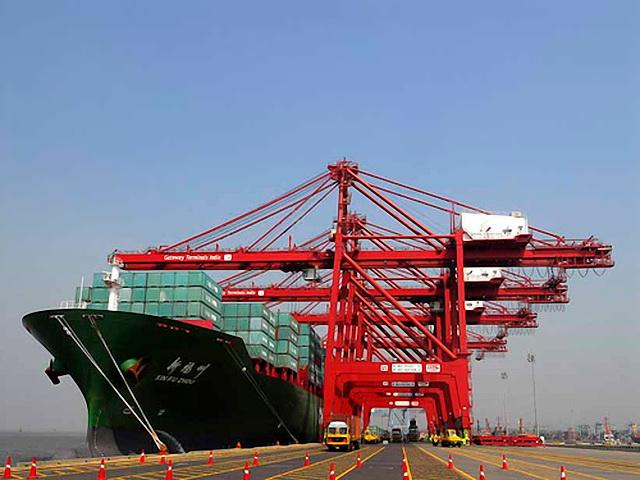
Cover photograph: Photograph by Jaxer, colour and contrast adjusted by Gladiool. Wikimedia Commons, CC BY 3.0. Cropped for display.




Speak to a senior advocate about your matter.
Tell us what's going on. We review every enquiry personally and reply within 24 working hours.
Schedule a Consultation
Takes under a minute. We'll come back to you within 24 working hours.
Request received.
Thank you — a Candour Legal advocate will contact you within 24 working hours.
Urgent? Call us right away.
Disclaimer — Bar Council of India
As per the rules of the Bar Council of India, advocates and law firms are not permitted to solicit work or advertise. This website is intended solely to provide general information about Candour Legal and its areas of practice, and is made available to the user only at the user's own specific request. The contents of this website do not constitute, and should not be construed as, legal advice, an advertisement, a solicitation or an invitation of any kind. Candour Legal assumes no liability for any action taken in reliance on the material on this website; readers facing a legal issue should seek appropriate professional advice on their specific circumstances. Use of this website, or transmission of any enquiry through it, does not create a lawyer-client relationship between the user and Candour Legal.
BEFORE YOU GO
Get a free 15-minute case assessment
Tell us what's going on and a Candour Legal advocate will call you back — no charge, no obligation.
Schedule my free assessment Call now